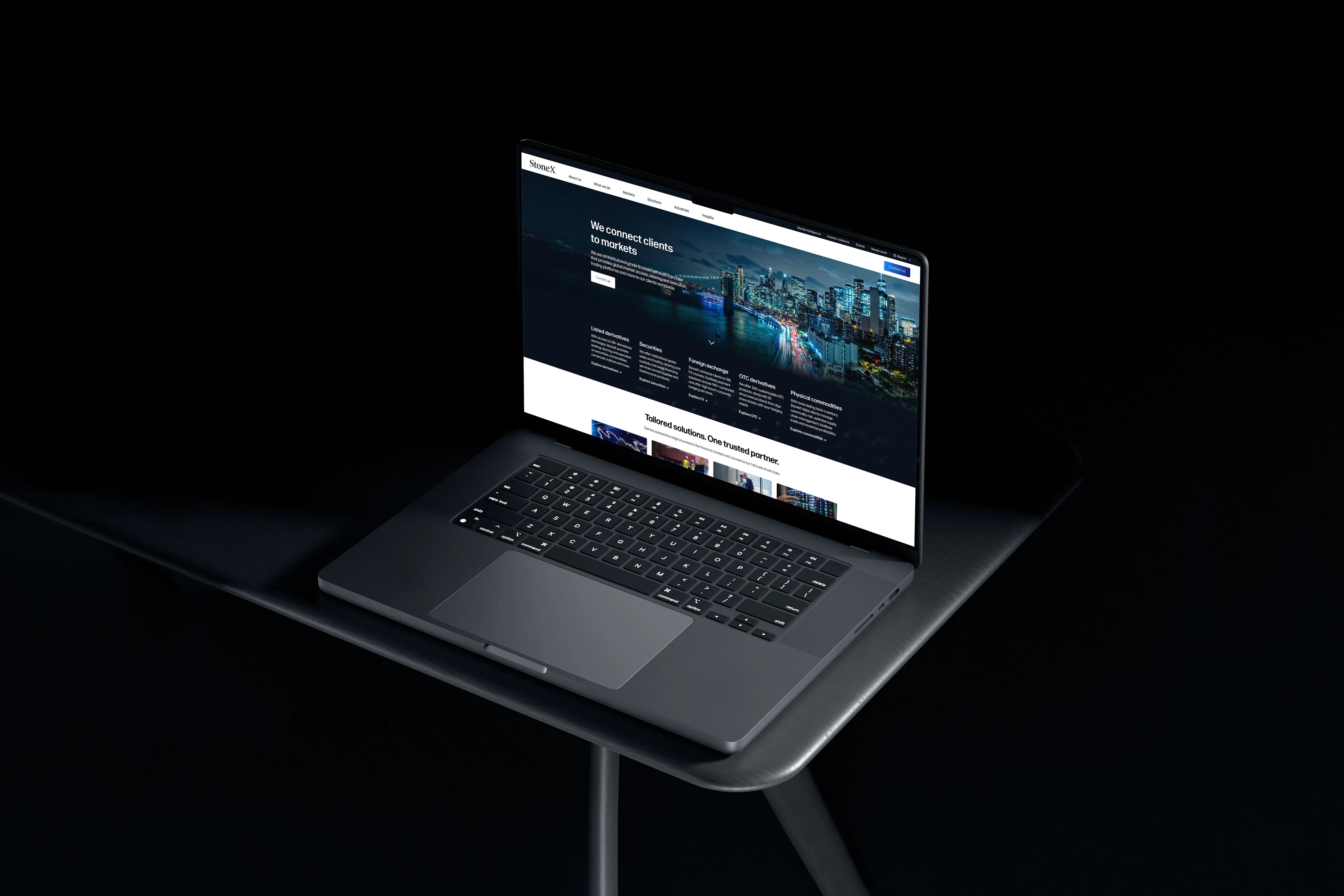
StoneX Website Redesign
Client
StoneX
Role
UI Designer
Year
2023
Deliverables
Website, Promotional Materials, Emails, Icons
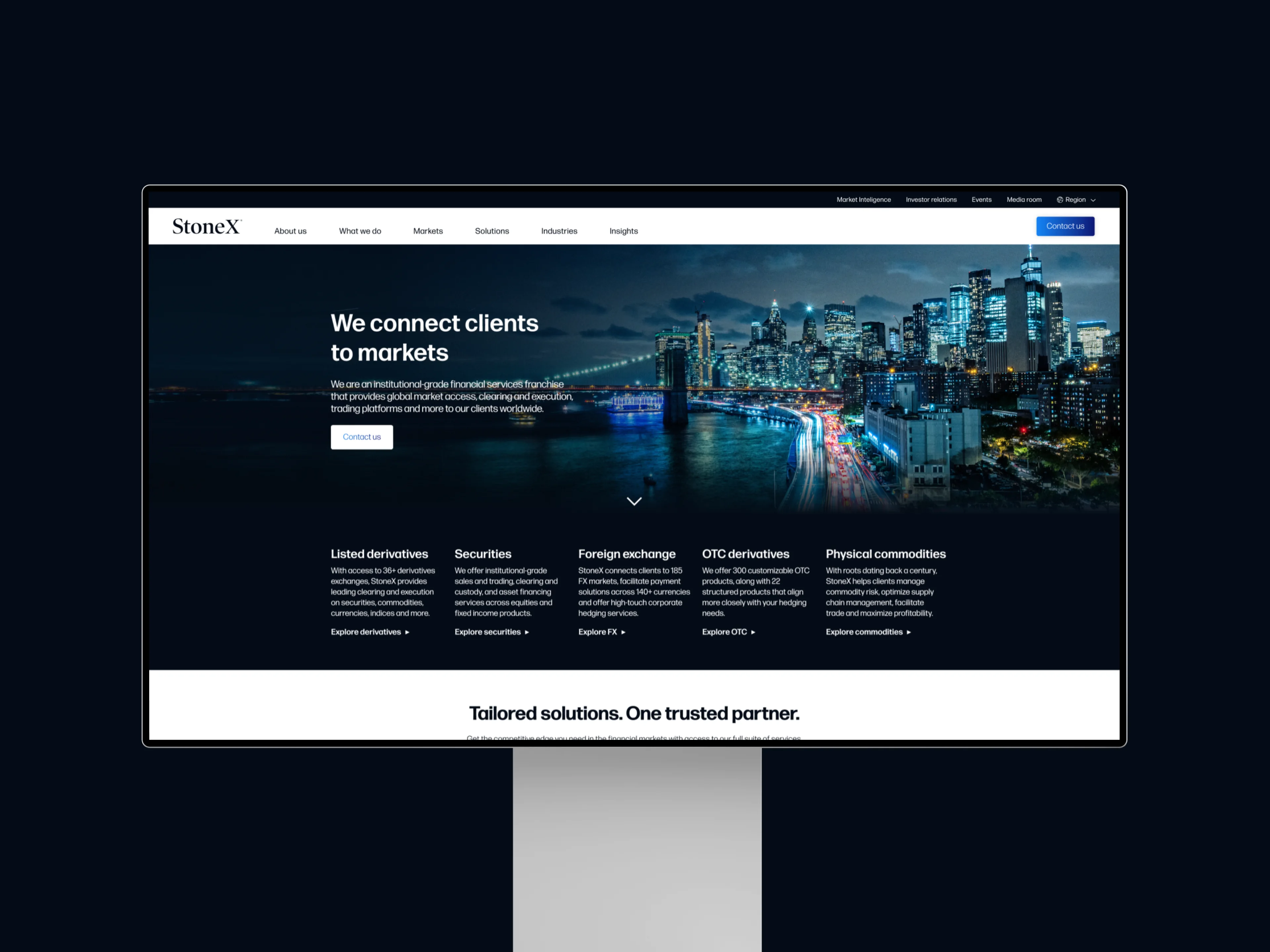
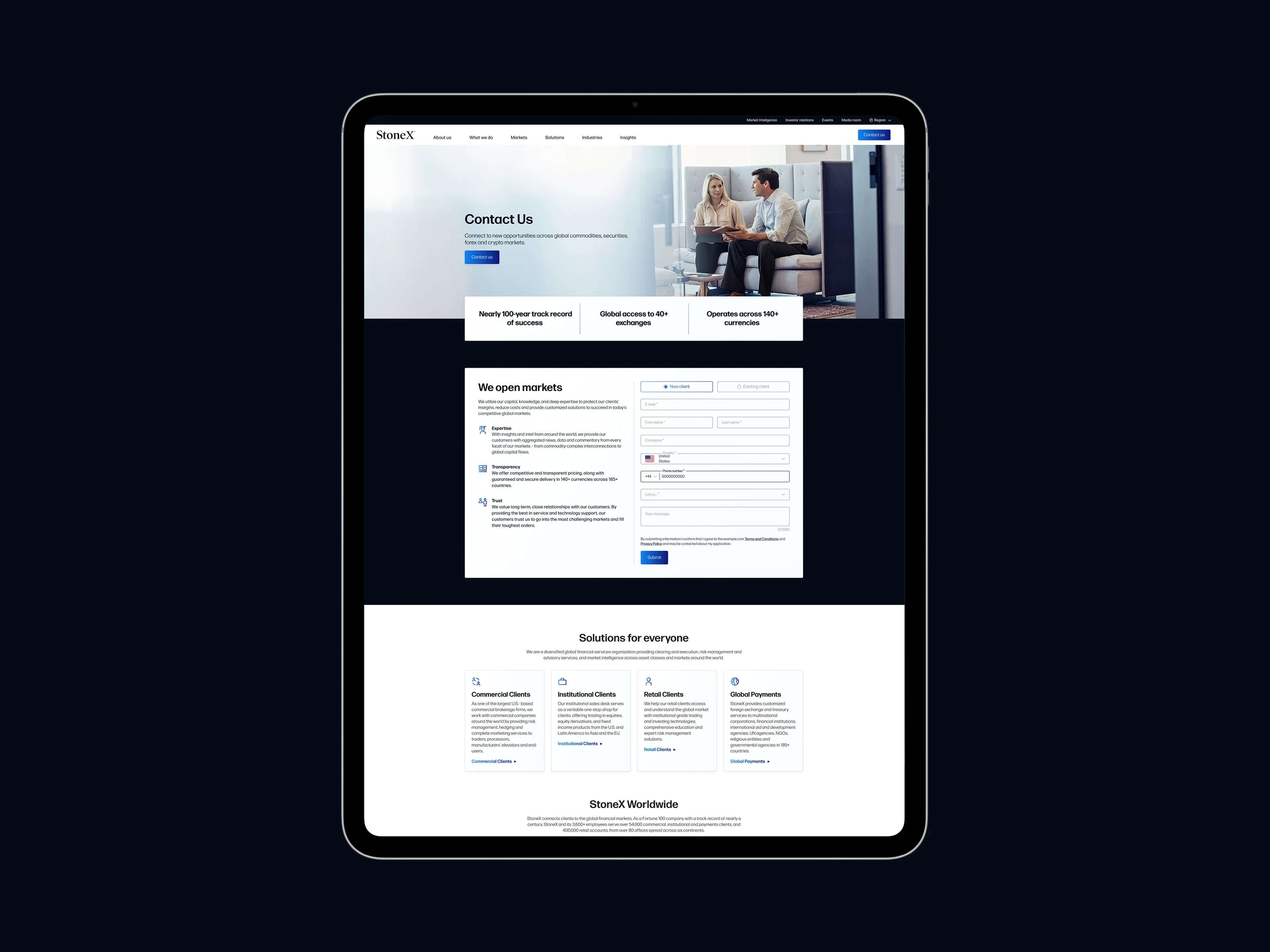
StoneX is a Fortune 500 financial services firm operating in over 180 countries, providing institutional-grade market access, trading, and risk management services across asset classes. Despite its scale and technological sophistication, the legacy StoneX.com site no longer reflected the breadth of its capabilities or the modern infrastructure supporting global operations.
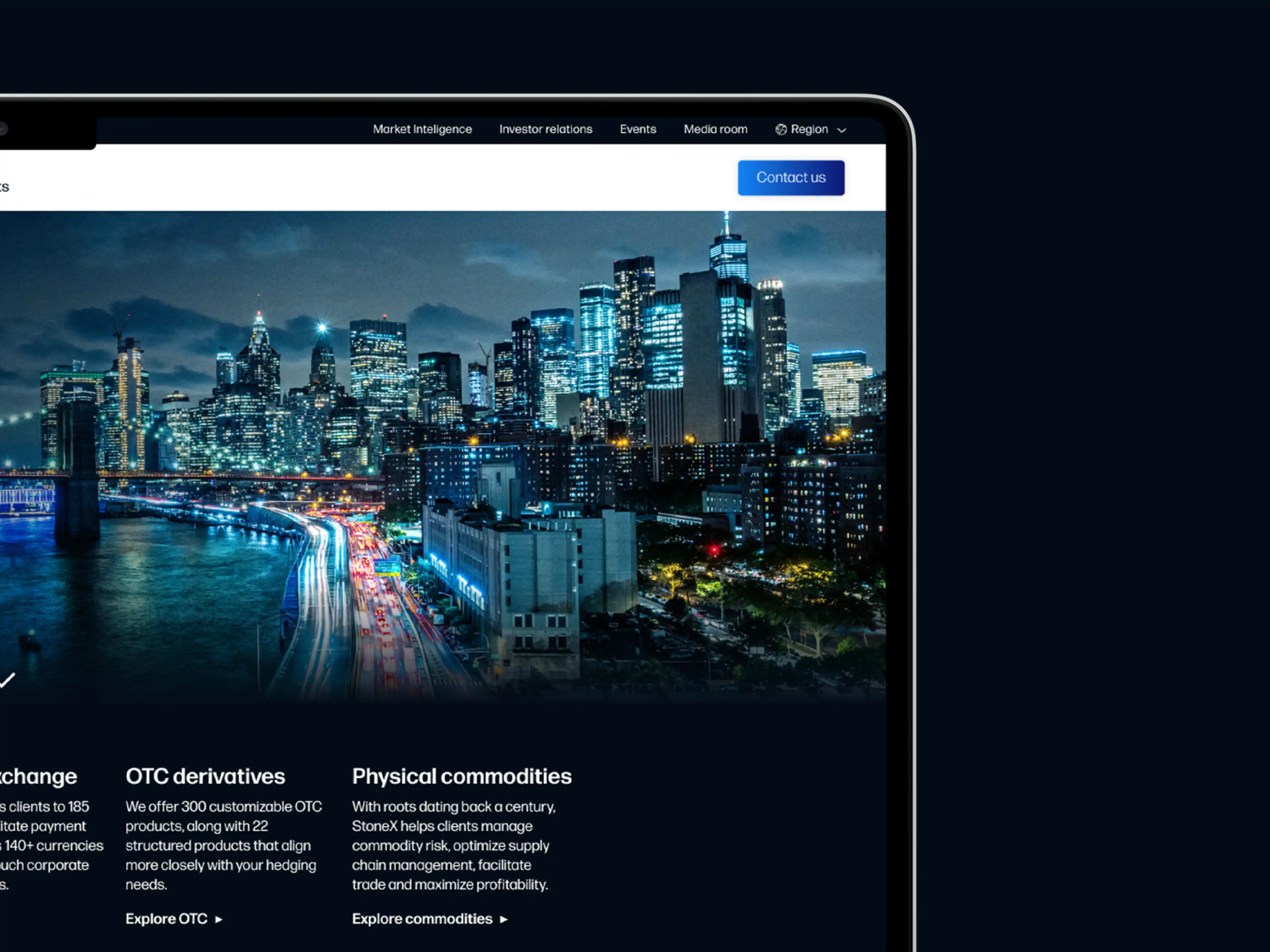
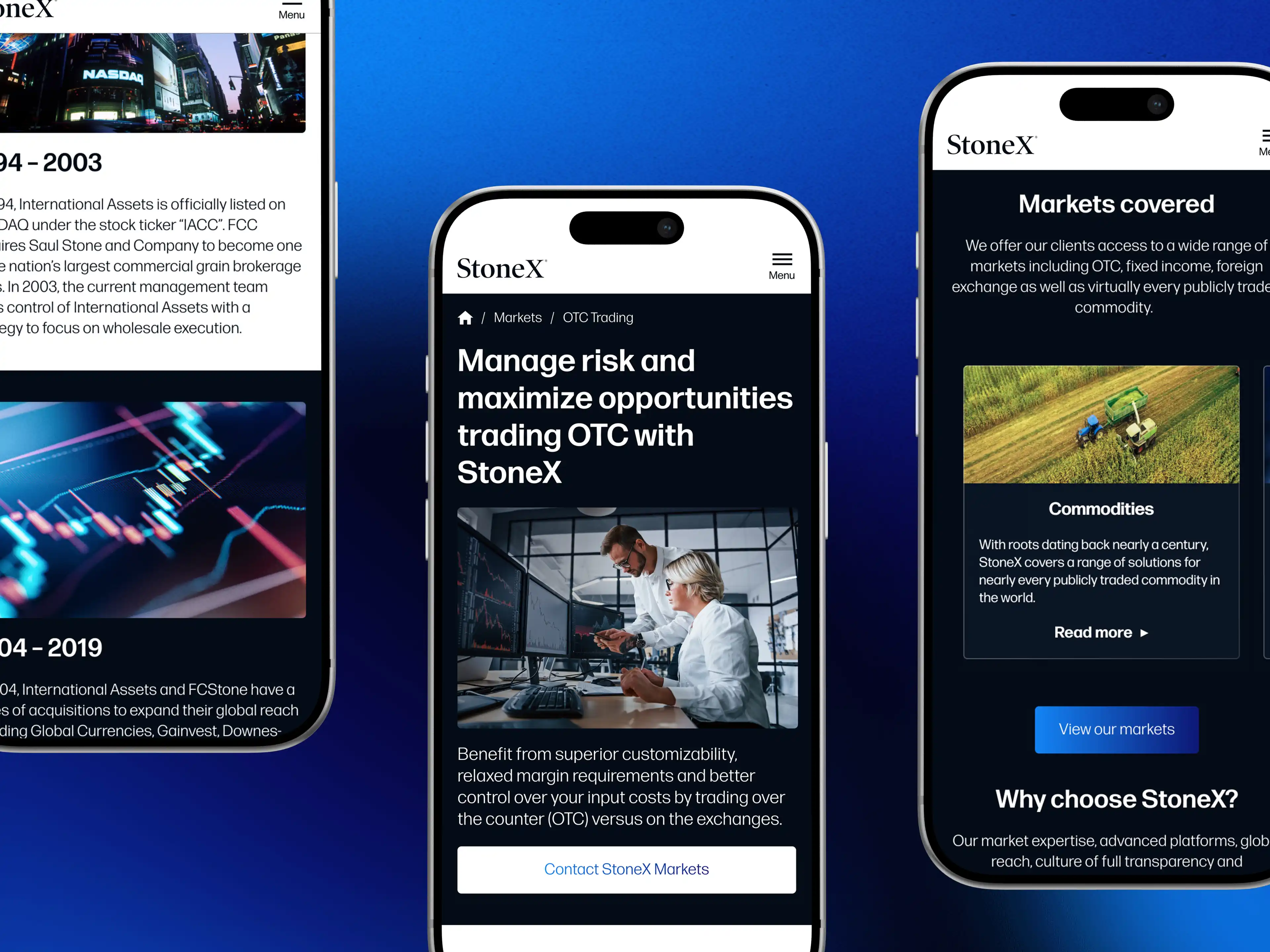
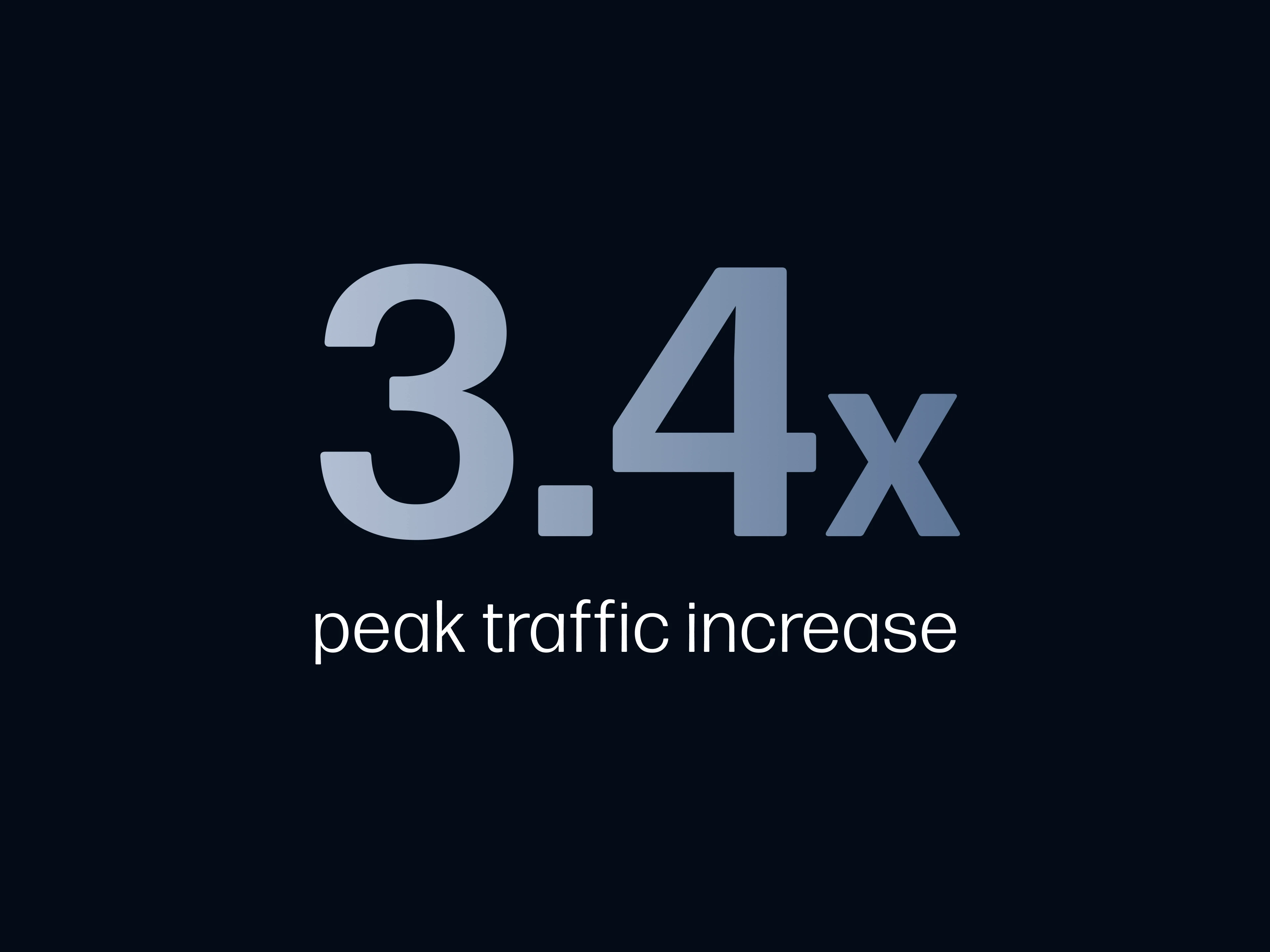
I was part of a three-person design team embedded within a larger cross-functional group that spent a year redesigning the platform from the ground up. We built a modular design system with 50+ components, designed 100+ pages, and created a custom icon library based on IBM's Carbon Design System. The result was a scalable foundation that improved developer efficiency, unified the global brand, and drove measurable engagement, with peak traffic reaching more than three times pre-launch levels.
Challenge
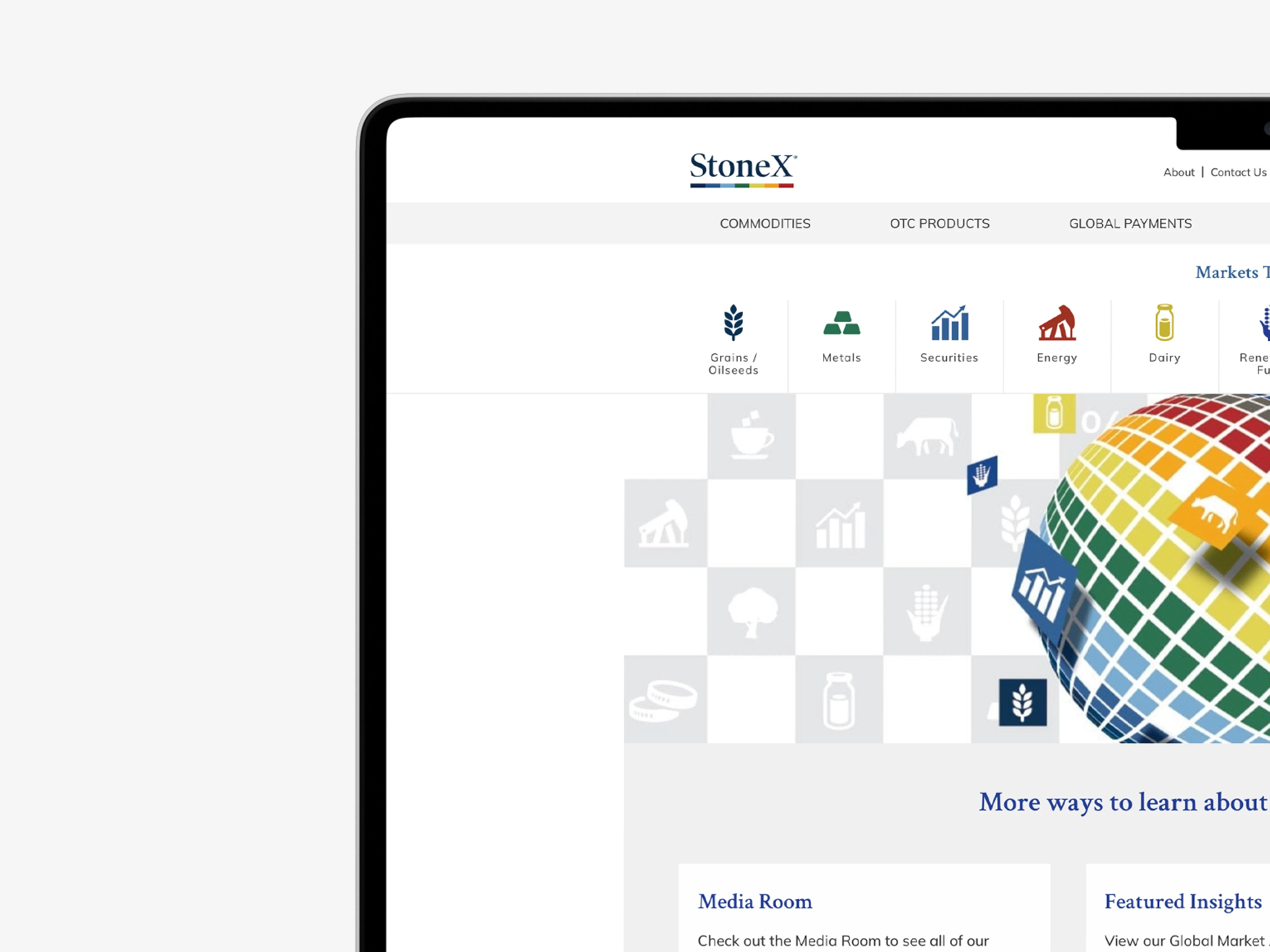
The existing platform had serious structural limitations. Page layouts and components were applied inconsistently across the site. Hard-coded templates made updates slow and resource-intensive for both design and development teams. Navigation was unintuitive, and the overall architecture no longer reflected StoneX's evolution into a modern global financial brand.
These issues created workflow bottlenecks and a fragmented digital presence that failed to serve institutional or retail audiences effectively. The objective extended beyond a visual refresh. We needed to rebuild the entire system to scale with the business, support localization, and enable regional teams to manage content autonomously without requiring constant design or development intervention.
Strategy & Approach
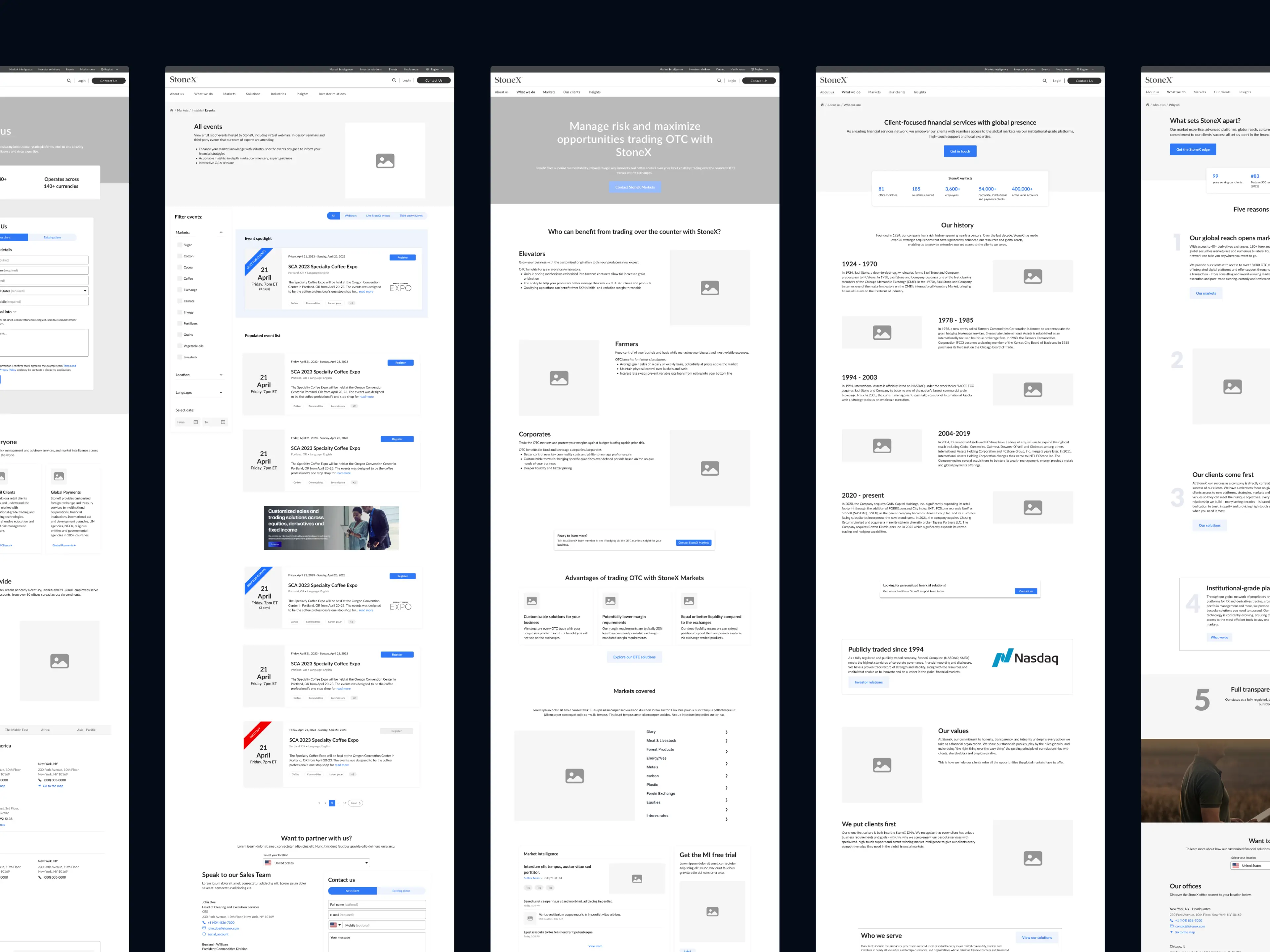
We began with a comprehensive content and UX audit to surface friction points around discoverability, responsiveness, and the constraints of the hard-coded infrastructure. UX researchers provided wireframes and site architecture, which our design team refined into high-fidelity designs. Throughout the process, we ran A/B tests on the homepage and key landing pages to validate layout variations, content hierarchy, and interaction patterns.
Our creative direction centered on clarity, trust, and scalability. The visual system needed to project credibility and modernity without alienating institutional clients. We designed components with flexibility in mind, allowing regional teams to localize content while maintaining a unified brand experience across markets and devices.
Process Overview
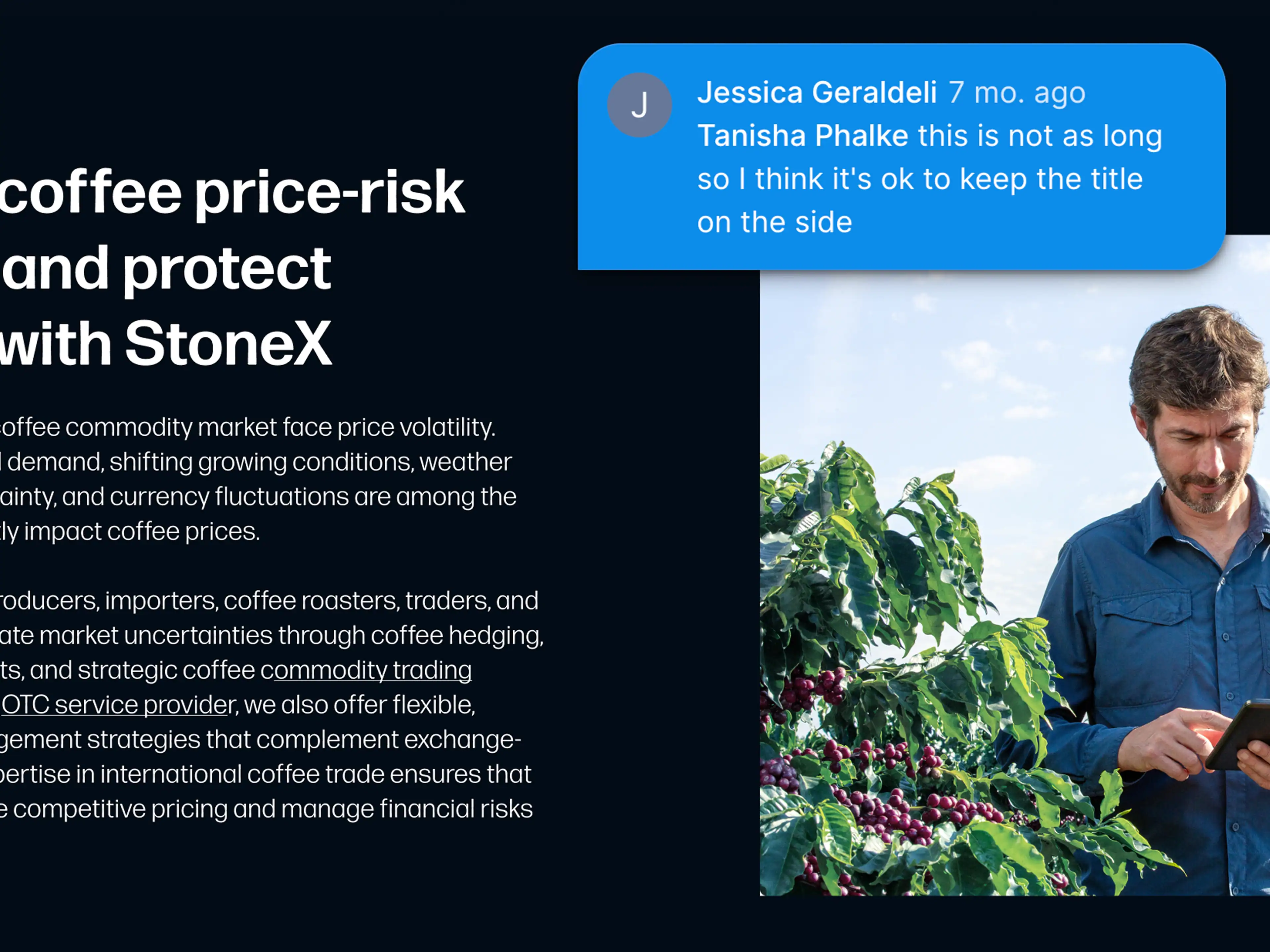
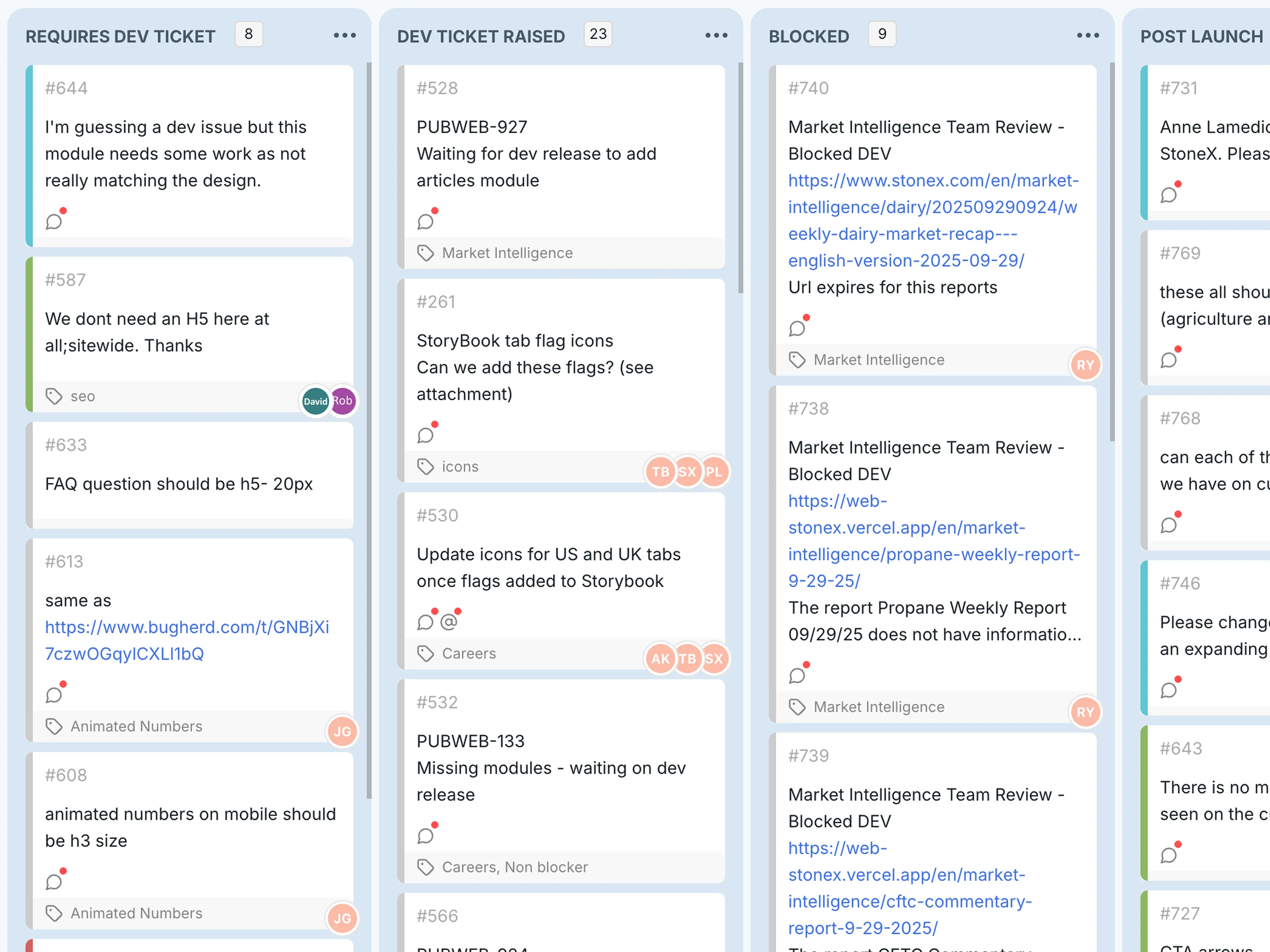
The project moved forward through agile sprints over the course of a year, with close collaboration across design, WebOps, development, project management, copywriting, and social media teams. Figma served as our primary design tool, while Jira and BugHerd managed tickets and QA workflows. Each sprint prioritized validating foundational templates and components before expanding to broader page types.
My contributions included designing page batches across hundreds of pages, building specific components, and creating detailed documentation for handoff. For each module, I documented sizing, states, and contextual usage to streamline implementation. When introducing new modules or modifying existing ones, I worked directly with development to assess build timelines and prioritize based on impact and technical feasibility.
Website & Design Execution
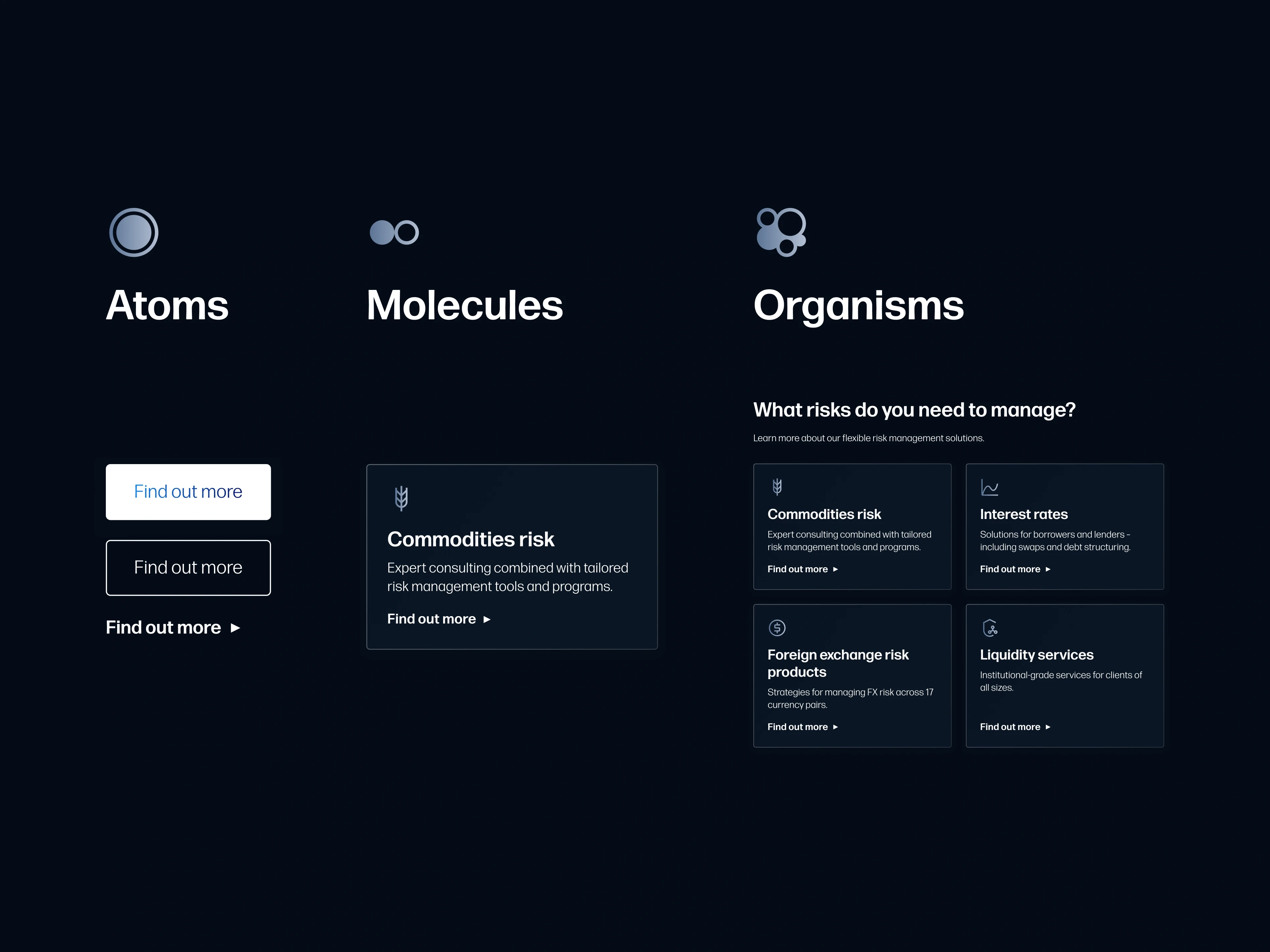
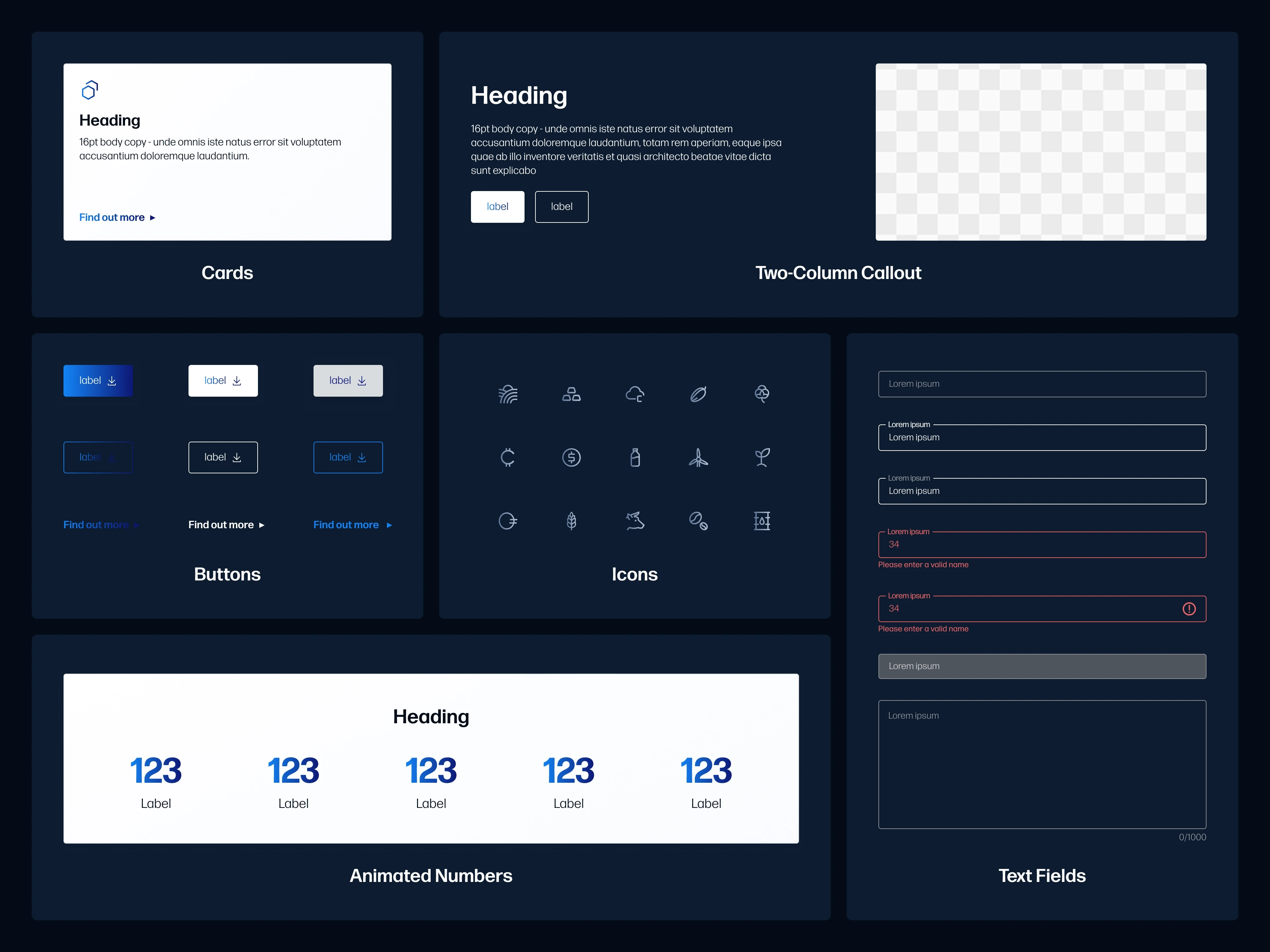
The design system was built in Figma using atomic components such as CTAs, cards, grids, banners, and navigation modules. This structure enabled regional marketing teams to build and expand pages independently, reducing the need for new design work while maintaining brand consistency.
I led the creation of a custom icon library, adapting and extending IBM's Carbon Design System with 30+ icons tailored to StoneX's visual identity and functional requirements. Carbon provided a strong foundation with a modern, tech-forward aesthetic that aligned with the brand direction. Each icon was refined for clarity, balance, and accessibility.
Key components I designed included:

Personalization Module: Stakeholders identified the need for dynamic content surfacing based on user interests and industry segments, particularly given the MVP's lack of search functionality. I designed and prototyped the complete module in Figma, including logic flows and interaction patterns, to guide first-time visitors toward relevant information tailored to their needs.
Sticky Navigation & Anchors: Designed to improve wayfinding on longer pages, particularly for institutional clients navigating dense content.
Animated Numbers Module: A card-based component displaying key metrics such as trading volume, years in operation, and global office count. Numbers animate upward when the module loads, introducing subtle motion while reinforcing credibility.
Bio Cards: Designed for author and leadership pages, balancing professionalism with approachability.
We also conducted extensive A/B testing on layout variations, eyebrow treatments, and color applications for modules like the two-column callout, ensuring hierarchy and readability functioned effectively across both light and dark themes.

Outcome
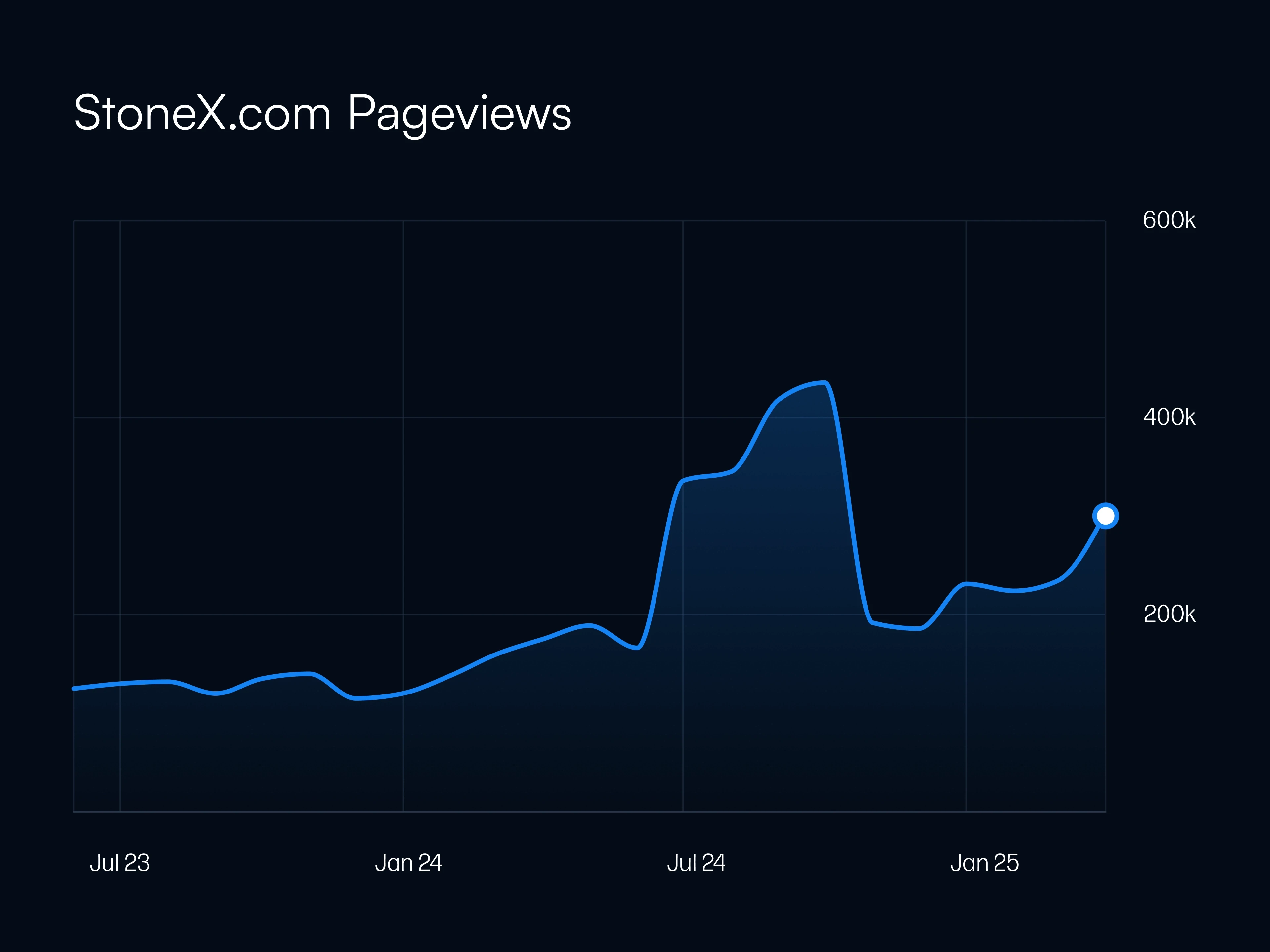
Since launching in October 2023, the platform has experienced significant and sustained increases in engagement. Monthly page views rose by more than 76% on average compared to pre-launch performance, with peak traffic reaching 435,000 views—over three times the previous baseline of approximately 127,000.
The modular architecture improved usability, performance, and scalability. Regional marketing teams can now publish and localize content efficiently while maintaining a consistent global brand presence. Feedback from stakeholders and users highlighted clearer navigation, faster load times, and a more cohesive visual identity.
The redesigned platform has become foundational to StoneX's ongoing digital transformation, demonstrating long-term scalability as the company continues expanding its global digital ecosystem.
Continuing Evolution
The initial release served as an MVP to validate the architecture, design system, and user experience at scale. Since launch, I've continued contributing to iterative enhancements that improve accessibility, flexibility, and performance.
A major focus has been the transition from Sitecore 9 to Kontent AI, a modern headless CMS supporting greater modularity and more efficient content management. This work has expanded into a multi-site consolidation effort, unifying regional properties from Argentina, Brazil, and Japan into a single system with shared components and design standards.
Working within an MVP framework reinforced the value of scalable structures, thorough documentation, and consistent cross-functional collaboration. These practices strengthened alignment, accelerated implementation, and ensured the design system could evolve alongside the organization's growth.